
On my mind

Feed

What’s caught my attention in AI lately.

Post from 9 November 2026

When an AI agent costs too much to run, the obvious fix is a cheaper model. The model’s usage charges are the cost you can see. But the people checking the agent’s work can cost much more than the model does.

Post from 4 November 2026

Say you’re paying an LLM to route every support ticket to the right team. You could put a cheaper model in front of it, let that model handle the tickets it’s confident about, and send only the rest to the LLM. That only works if “confident” means “correct”.

Post from 2 November 2026

When people accept 96% of an AI’s suggestions, it’s easy to assume the AI is working. That number can mean the AI became extremely good. It can also mean people stopped checking.

Post from 26 October 2026

An AI agent is a language model in a loop, so it’s easy to assume every step in it needs one. But look at what those steps ask: many aren’t asking the model to write anything, just to pick.

Post from 24 October 2026

If your team plans to trust an AI agent by reading its reasoning, I’d look somewhere else first: at what the agent actually does.

Post from 21 October 2026

An AI agent that reasons in text writes out every step as words, including the steps only it will read.

Those text outputs do two jobs. Some are the model’s scratch work, read only by the model. Some are messages to a tool or a person. But theoretically speaking, only the messages have to be words; the scratch work could stay as numbers inside the model.

Post from 19 October 2026

Adding an AI feature to a product usually starts with picking a vendor’s API.

That one choice decides two things: which model you use, and where it runs. With a closed model like GPT or Claude, the vendor or one of its cloud partners runs it. You can often pick a region, but your data still leaves your own systems.

Post from 17 October 2026

In my last post, I wrote about Beam, the open model from Reflection AI. One number in its announcement is easy to misread: it uses 23B of its 501B parameters for each token it processes.

For those not familiar with this, parameters are the numbers a model learns in training. These billions or even trillions numbers determine how the model processes inputs and generates outputs (tokens). A token is a word or piece of a word. To run the model, they have to be loaded into GPU memory.

Reflection AI claims that Beam needs less computing power to run comparing to other models due to the nature of how it’s built.

Post from 15 October 2026

When the company that sells most AI chips looks at buying an AI lab, it reads like a move to compete with OpenAI.

Reuters, citing the Financial Times, reports Nvidia is in talks to invest further in Reflection AI. Reflection builds open-weight models - trained models that are published so anyone can download and run on their own hardware. In fact, it just announced a new open-weight model called Beam.

Post from 13 October 2026

“The PoC for an agentic AI implementation isn’t delivering value. Let’s try a better model.”

That recommendation already assumes a diagnosis we haven’t established.

Reaching for a stronger model assumes model capability is what’s preventing the current implementation from delivering the expected results. It might be. But that’s still a hypothesis, which should be tested before it gets funded.

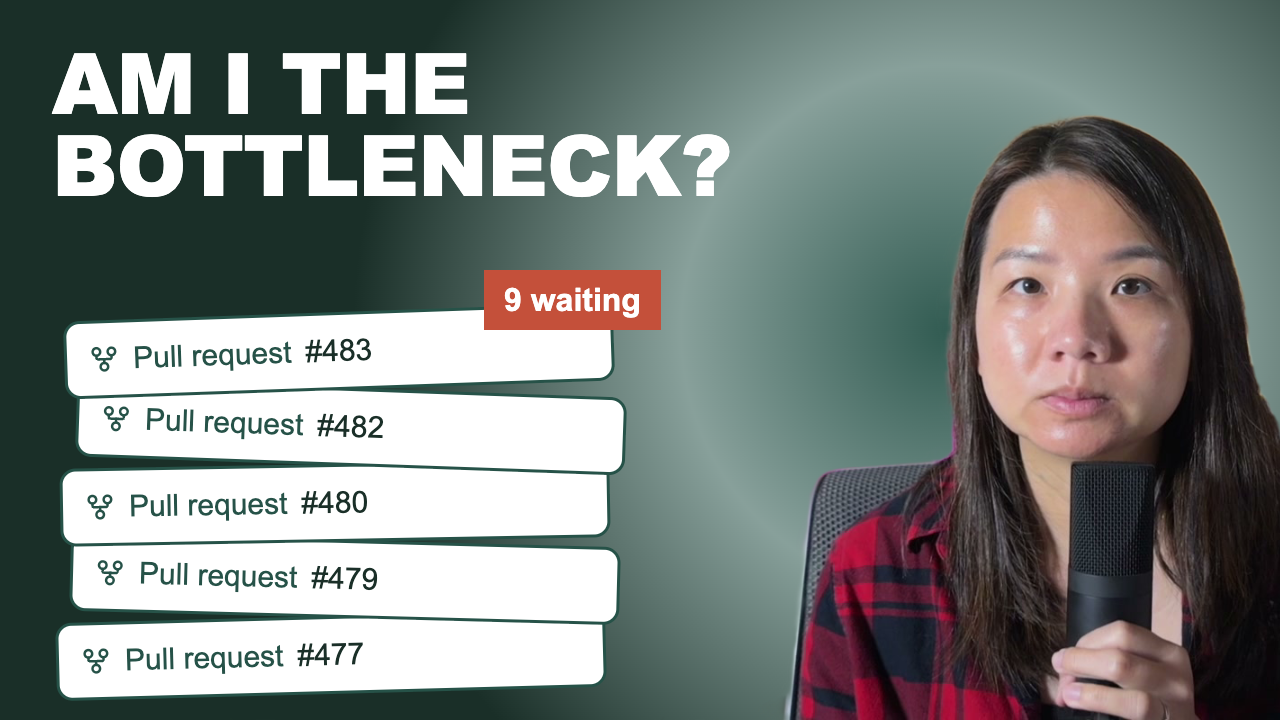
AI Made Your Team Faster. Why Are Reviews Slower?

Your teammate builds a feature with AI in 20 minutes, and you spend the afternoon working out what it does. If you’ve started to wonder whether you’re the bottleneck, here’s how I think about it: the review burden usually has two different sources, and they need two different fixes.

This video separates the amount of code coming at reviewers from the understanding that hasn’t happened before the code reaches them. It uses one example (a spreadsheet import that quietly brings back an old phone number) to show what understanding a change actually involves, and ends with two things to try on your next few pull requests.

Post from 8 October 2026

An abandoned AI project can leave behind something you probably don’t want: an identity that still has access to your production systems.

Imagine a team experimenting with an internal AI agent that helps support engineers investigate customer issues. They give it a service identity with read access to production customer data.

The prototype works, but priorities change. The project gets abandoned, and everyone moves on.

Post from 7 October 2026

“Human in the loop” sounds like a safety strategy. But I’m starting to think it’s too vague to be useful.

Post from 5 October 2026

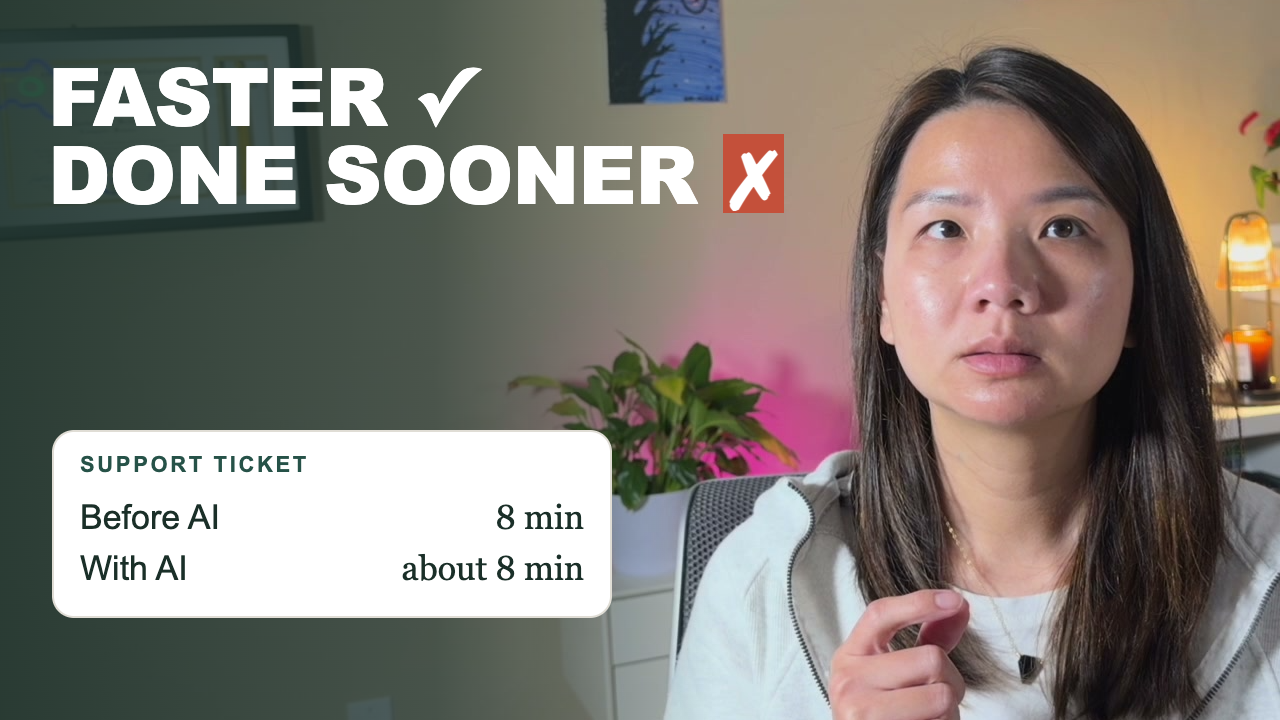
I used to think the productivity gain from AI was pretty straightforward:

If coding takes 25 minutes with AI instead of 2 hours without it, that’s a big productivity improvement.

But I’m realizing that’s measuring the wrong boundary.

Post from 3 October 2026

AI-generated code can pass every automated security check you give it and still contain a security decision nobody actually made.

Imagine an AI coding assistant builds authentication for a fintech app and gives session tokens a 7-day lifetime. A static code analyzer might see:

  • the token is generated correctly
  • the signing algorithm is approved
  • the secret isn’t hard-coded
  • no known vulnerability is present

Everything passes. ✅

But should a session that can authorize financial transactions stay valid for 7 days?

Post from 2 October 2026

Least privilege answers an important security question:

What is this identity allowed to do?

For AI agents, that still matters. But it’s no longer the whole question.

Post from 1 October 2026

I used to think SQL could only match keywords. This week I learned it can filter by meaning: Quail, an open-source “AI-SQL” engine, lets a query ask an LLM a yes/no question about each row.

Your Team Wants To Build An AI Feature. Now What?

Your team wants an AI feature, and you’re the one who has to work out how it fits the existing codebase, data and security model. Here’s how I think about it, from context and trust boundaries to the deterministic gates that keep a non-deterministic model in check.

This video walks through the architectural decisions you need to make before writing a single line of agent code, using a real scenario (fulfilling a customer order) to show where the model’s job ends and your architecture begins.